Frequently Asked Questions:
How much weight can a goods lift carry?
Industrial goods lifts can handle different payloads based on design, ranging from moderate loads to several tonnes for demanding material-handling applications.
Which elevator is suitable for factories and warehouses?
Hydraulic, traction, and MRL cargo elevators can suit different facilities depending on load requirements, building layout, travel distance, and usage frequency.
What is the cost of an industrial freight elevator in Pakistan?
The price depends on load capacity, travel height, stops, shaft conditions, and selected lifting system. Contact 0321 586 3975 for a project-specific estimate.
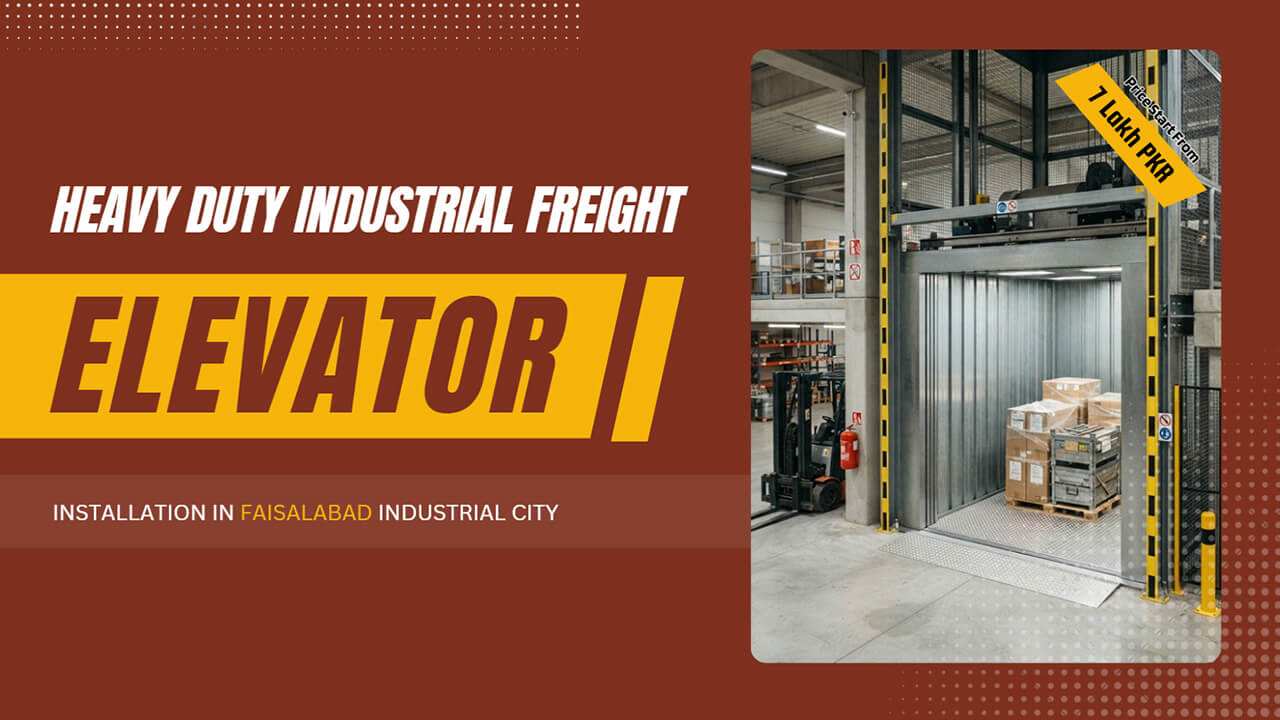
Heavy duty freight elevators help factories move machinery, pallets, raw materials, and bulky goods between multiple floors. These systems support smoother internal logistics where manual carrying can slow daily production activities. Industrial Freight Elevator Installation provides a practical way to manage substantial loads across manufacturing, storage, and processing areas. Proper capacity selection helps maintain dependable movement during frequent loading cycles. Suitable travel height, landing positions, cabin dimensions, and structural conditions should be reviewed before installation. Safety controls also help protect workers, equipment, and transported materials during regular use. A professionally planned freight elevator can support organized material handling across demanding industrial environments.
Manufacturing Units Across Faisalabad Industrial City Needing Dedicated Goods Lifting
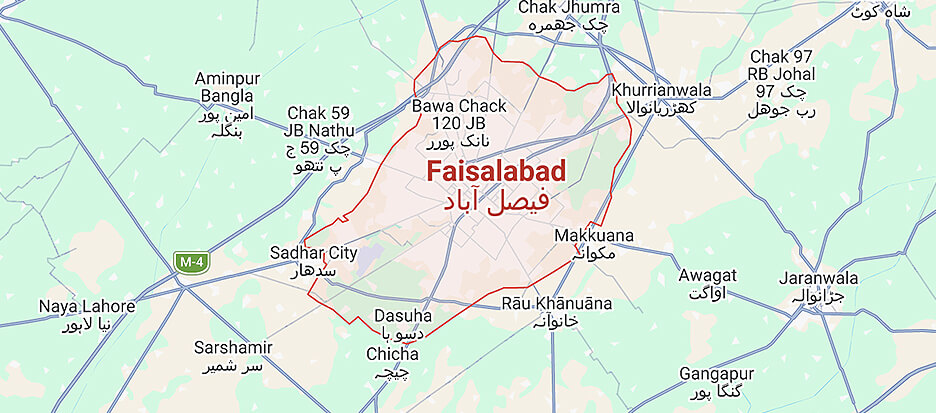
Manufacturing facilities often require dependable vertical transportation for raw materials, finished products, machinery, and production supplies. Dedicated goods lifting can reduce unnecessary manual carrying between warehouse areas, processing floors, and loading points. Industrial Freight Elevator Installation can support factories in Faisalabad where heavy items require repeated movement throughout the working day. The selected system should match the building layout, expected load frequency, travel distance, and available shaft space. Proper landing access also helps workers transfer materials more efficiently between operational sections. Strong construction and suitable controls can further support dependable service under demanding conditions. These considerations make dedicated freight transport useful for facilities with regular heavy-load requirements.
Why Industrial Freight Elevator Installation Reduces Manual Handling When Moving Heavy Goods Between Floors
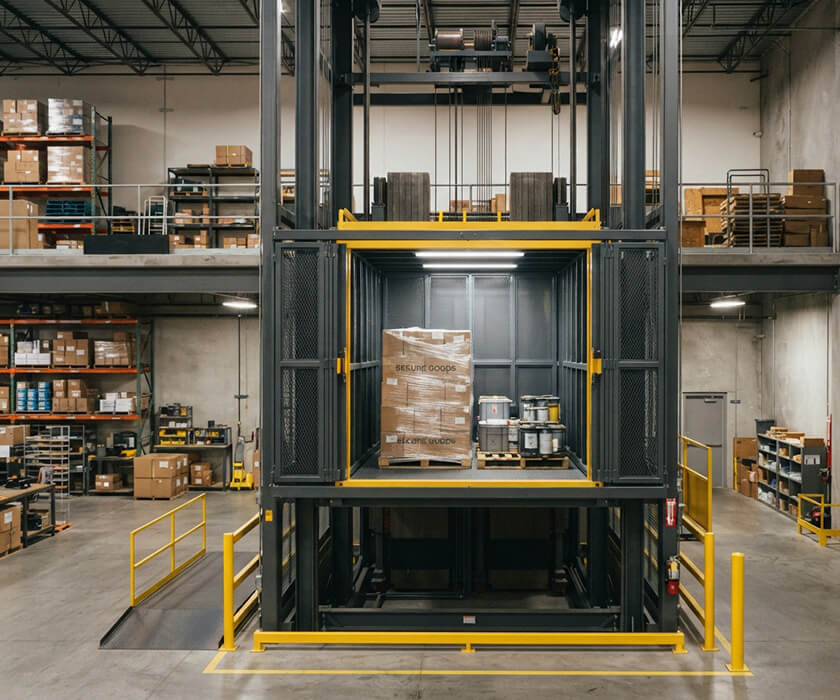
Moving heavy goods manually between floors can require additional labor while increasing physical effort during routine operations. A dedicated freight elevator provides a controlled route for transporting bulky materials, equipment, pallets, and production supplies. Industrial Freight Elevator Installation helps reduce repeated carrying by providing direct vertical access between selected working levels. This can make internal material movement more organized while supporting smoother warehouse and factory workflows. Appropriate load capacity allows workers to transport heavier items without relying on repeated manual lifting. Safety mechanisms can also help control access, loading, and movement during everyday operation. As a result, well-planned vertical transportation can contribute to more practical heavy-goods handling.
1- Decreases Physical Demands During Routine Load Handling Using MRL Lifts
Repeated lifting and carrying can place unnecessary physical demands on workers handling heavy industrial materials. MRL lifts can provide direct vertical movement when a suitable shaft arrangement is available within the facility. Industrial Freight Elevator Installation can reduce the need for workers to carry dense supplies manually across stairways or between separate floor levels. Appropriate load ratings help accommodate routine movement of equipment, cartons, pallets, and other heavy items. Careful planning also considers cabin dimensions, access points, stopping positions, and expected usage patterns. Reliable controls can make loading and unloading more manageable during regular operations. This approach supports a more organized material-handling process across multi-level work areas.
2- Relocates Heavy Industrial Supplies Through Hydraulic Material Elevators
Hydraulic material elevators can provide practical vertical transportation for facilities that regularly move heavy supplies between different working levels. Their lifting arrangement can support warehouses, production areas, and storage sections where substantial loads require dedicated movement. Industrial Freight Elevator Installation can help connect key handling points while reducing dependence on manual transportation routes. Proper sizing should consider the weight of typical goods, travel height, floor stops, and available structural space. Suitable loading access can also make pallet and equipment transfers easier during daily operations. Safety controls help maintain orderly movement while supporting workers during loading and unloading activities. A correctly planned system can improve the flow of supplies across multi-level industrial premises.
3- Enables Controlled Goods Transport Safely With Traction Cargo Lifts
Traction cargo lifts can support controlled movement of heavy goods across facilities with regular vertical transportation requirements. Their configuration can suit warehouses, factories, and storage areas where materials need dependable floor-to-floor access. Industrial Freight Elevator Installation can help establish a dedicated route for transporting bulky products, equipment, and packaged supplies. Correct load selection ensures the system matches the expected weight of goods and frequency of use. Door arrangements, landing access, and control functions should also suit the site’s daily handling process. Safety provisions can help manage loading activity while reducing unnecessary exposure to manual lifting. This creates a more structured approach to moving goods throughout multi-level facilities.
Detailed Cost Breakdown for Heavy Duty Goods Elevators in Warehouse Work Environments
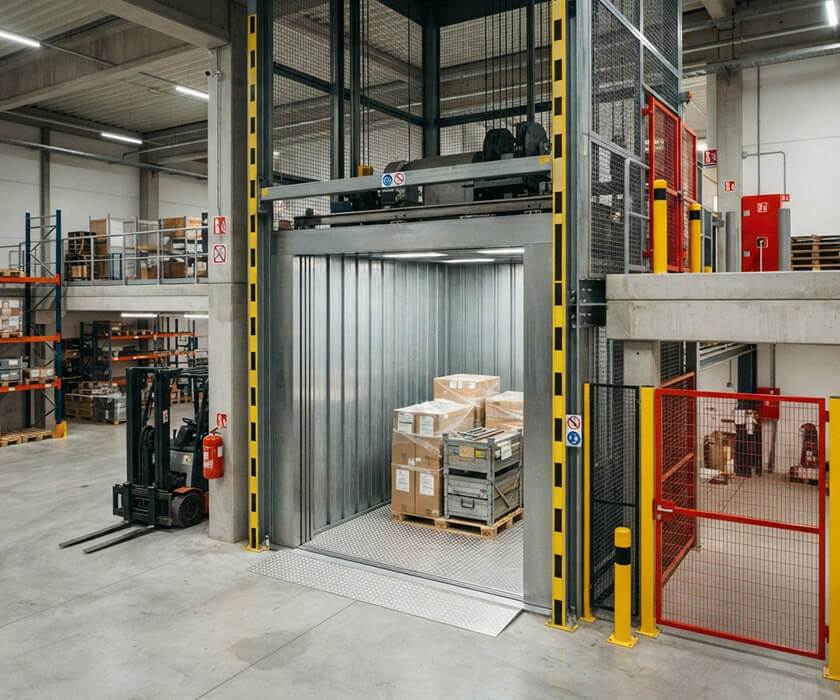
The cost of a heavy duty goods elevator depends on several project conditions, including lifting capacity, travel height, number of stops, cabin dimensions, and equipment selection. Warehouse layouts may require different specifications based on storage arrangements, loading points, and daily material movement. Industrial Freight Elevator Installation costs can also vary according to shaft preparation, structural work, door configuration, controls, and site conditions. A clear project assessment helps identify the equipment requirements before final pricing is prepared. Higher capacities and longer travel distances may increase the overall investment. Additional civil, electrical, or finishing work can also affect the final project budget. Reviewing these factors helps warehouse operators plan a suitable freight elevator within their operational requirements.
Budget Range for Hydraulic Material Lifts in Manufacturing Units
Hydraulic material lifts can provide a practical option for manufacturing units handling regular heavy goods across limited travel heights. Their project cost depends on load capacity, vertical travel, landing requirements, cabin dimensions, and installation conditions. Industrial Freight Elevator Installation may also involve structural preparation, electrical connections, landing doors, safety controls, and commissioning work. A suitable budget should therefore consider both the lifting equipment and supporting site requirements. The following figures provide a general planning range for a compact heavy-load application. Final pricing can change after a technical survey and specification review. Actual costs should be confirmed according to the selected capacity, finishes, and building conditions.
Travel Height: 20 ft
Number of Floors or Stops: 3
Estimated Price: PKR 2,500,000–4,000,000
Cost Assessment for Traction Freight Elevators in Storage Sections
Traction freight elevators can suit storage sections requiring repeated movement of substantial goods between multiple floors. Project expenses generally depend on rated capacity, travel height, number of stops, cabin size, door arrangement, and selected control equipment. Industrial Freight Elevator Installation may require additional work for shaft preparation, landing access, electrical supply, safety systems, and commissioning. Storage facilities should also consider the dimensions and weight of their most frequently transported items. The figures below offer a general budget reference for a medium-duty multi-level application. Actual pricing may vary according to structural conditions and equipment specifications. A detailed site assessment is recommended before confirming the final investment.
Travel Height: 30 ft
Number of Floors or Stops: 4
Estimated Price: PKR 3,500,000–5,500,000
Estimated Investment for MRL Cargo Lifts in Multi-level Factories
MRL cargo lifts can help multi-level factories manage goods movement where available building space requires careful equipment planning. Investment levels depend on capacity, travel distance, number of stops, cabin dimensions, door configuration, and control requirements. Industrial Freight Elevator Installation may also include shaft preparation, electrical coordination, landing works, safety equipment, and commissioning. Factories should assess their regular load profile before selecting the required lifting capacity. The following figures provide a general estimate for an industrial cargo application with moderate travel requirements. Final costs can change according to building conditions, specifications, and selected equipment. A technical assessment can establish the exact requirements before procurement or installation.
Travel Height: 40 ft
Number of Floors or Stops: 5
Estimated Price: PKR 4,500,000–7,000,000
| Lift Category | Estimated Cost (PKR) |
|---|---|
| Hydraulic Cargo Lift | 1,500,000 – 2,500,000 PKR |
| Traction Cargo Lift | 3,500,000 – 5,000,000 PKR |
| Chain-Driven Cargo Lift | 2,000,000+ PKR |
| Heavy Duty Cargo Lift | 5,000,000+ PKR |
| Platform Cargo Lift | 2,000,000 – 4,000,000 PKR |
| Industrial / Warehouse Cargo Lift | 1,500,000 – 6,000,000+ PKR |
| Custom Built Cargo Lift | 5,000,000 – 25,000,000 PKR |
Key Performance Characteristics for Smooth Heavy Material Transport Across Factory Facilities
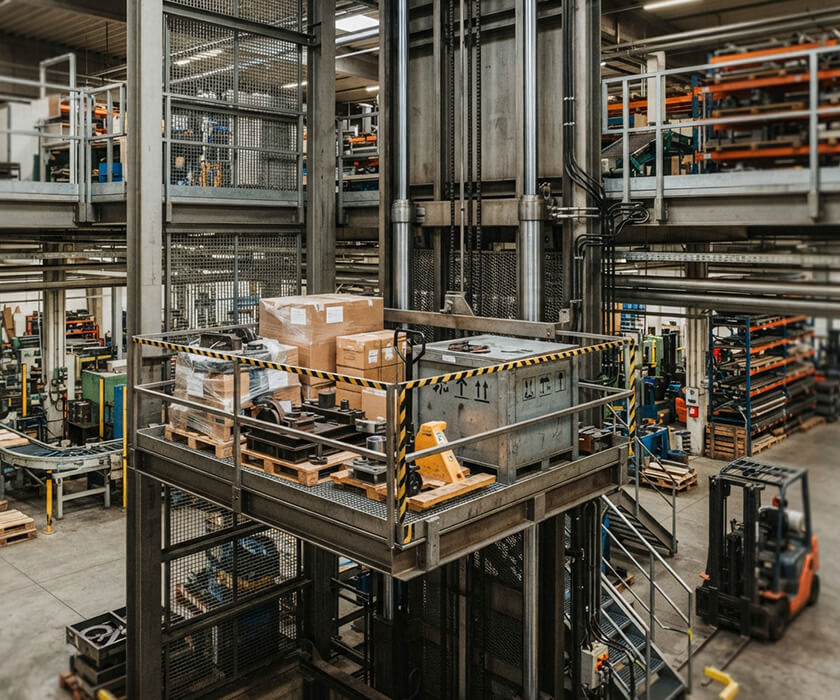
Heavy material transportation requires equipment capable of handling repeated loading cycles while maintaining controlled vertical movement. Suitable freight elevator systems can support the transfer of machinery, pallets, raw materials, and finished products across different factory levels. Industrial Freight Elevator Installation should be planned around expected payloads, operating frequency, building structure, and access requirements. Strong cabin construction helps accommodate demanding working conditions where goods may be loaded regularly. Appropriate door arrangements can make loading and unloading more practical for bulky items. Reliable control systems also support consistent positioning at designated floors. Together, these characteristics help create a dependable material transportation process within factory facilities.
1- Greater Payload Capacity During Industrial Freight Elevator Installation
Greater payload capacity allows freight elevators to carry heavier materials without requiring multiple separate trips. This can be useful for factories transporting machinery, pallets, equipment, and dense production supplies between working levels. Industrial Freight Elevator Installation should account for the maximum expected load rather than relying only on average daily requirements. Correct capacity selection can support more efficient handling while helping prevent unsuitable loading practices. Cabin dimensions should also accommodate the size and arrangement of commonly transported goods. Proper load management supports consistent operation throughout frequent handling cycles. Selecting an appropriate capacity therefore helps align vertical transport with the facility’s actual material movement needs.
2- Tough Interior Structures Within Material Lift Cabins for Frequent Loading
Frequent loading can expose elevator interiors to impacts from pallets, equipment, containers, and other heavy goods. Durable interior construction helps maintain the cabin condition when materials are moved repeatedly throughout the working day. Industrial Freight Elevator Installation should consider floor strength, wall protection, entry dimensions, and the expected handling environment. Reinforced surfaces can help reduce wear caused by regular loading and unloading activity. Suitable interior finishes may also make routine cleaning and upkeep easier in busy facilities. The cabin should be configured around the dimensions and weight distribution of transported goods. These considerations support longer-lasting performance under demanding material-handling conditions.
3- Adaptable Opening Styles Through Cargo Elevator Door Systems for Varied Loads
Cargo elevator door systems can be selected according to the dimensions, handling method, and access requirements of the transported goods. Wider openings may help accommodate pallets, machinery, carts, and other bulky materials during loading operations. Industrial Freight Elevator Installation should evaluate landing access alongside cabin dimensions to ensure practical movement between floors. Suitable door configurations can make loading and unloading more convenient while supporting controlled entry. Door operation should also match the expected frequency of use within the facility. Safety interlocks and appropriate controls help prevent movement when access points are not securely closed. A well-matched opening arrangement can therefore improve the practicality of heavy goods transportation.
Verifyne Lift Consultancy Engineering Guidance for Factory Vertical Mobility Requirements
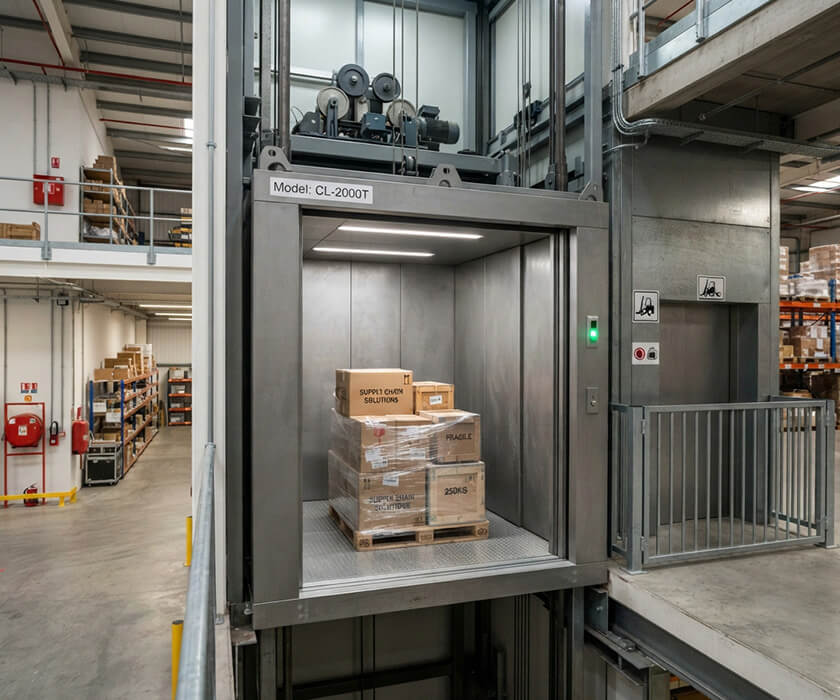
Factory vertical transportation requires careful coordination between structural conditions, equipment specifications, access requirements, and operational needs. Verifyne Lift Consultancy can provide engineering guidance for evaluating shaft dimensions, floor heights, landing positions, traffic patterns, and expected usage. Industrial Freight Elevator Installation should be planned only after the site’s physical limitations and material-handling requirements have been reviewed. Technical coordination can help align architectural, electrical, and structural requirements before equipment selection. Project scheduling can also support smoother execution across different construction stages. Testing, commissioning, and maintenance planning should form part of the overall project review. This structured advisory approach can help factories establish practical vertical mobility arrangements suited to their daily operations.
1- Site Evaluation Analysis for Industrial Freight Elevator Installation
A detailed site evaluation helps identify the physical conditions that may affect freight elevator planning and installation. Key considerations include shaft dimensions, floor heights, access points, pit conditions, headroom, structural strength, and available electrical provisions. Industrial Freight Elevator Installation can then be planned around the actual requirements identified during the assessment. Expected load weights and material dimensions should also be reviewed before selecting suitable equipment. Existing building limitations may influence cabin size, landing arrangement, or installation scheduling. Early technical evaluation can reduce avoidable changes during later project stages. A structured assessment therefore provides a stronger basis for coordinating equipment selection with the factory layout.
2- Workflow Planning Support Through Lift Deployment Assessments
Workflow assessment helps determine how goods currently move between production areas, storage sections, loading points, and different floors. Lift deployment planning can identify suitable access locations based on traffic frequency, material dimensions, operating schedules, and workforce movement. Industrial Freight Elevator Installation can then be aligned with the facility’s actual transportation routes rather than being positioned without operational review. Proper planning may reduce unnecessary travel distances while supporting more organized goods handling. Landing locations should provide practical access for carts, pallets, machinery, or other frequently transported items. Coordination with production schedules can also help reduce disruption during implementation. These assessments support a freight transport arrangement that fits naturally into the facility’s daily workflow.
3- Preventive Service Scheduling With Elevator Performance Reviews
Regular service planning helps maintain reliable freight elevator operation after installation and commissioning. Preventive inspections can identify wear, control issues, door problems, or other conditions before they develop into larger operational concerns. Industrial Freight Elevator Installation should therefore be followed by a structured maintenance approach based on usage frequency and equipment requirements. Performance reviews can examine travel quality, stopping accuracy, door operation, safety controls, and general equipment condition. Scheduled servicing may also help maintain consistent operation in facilities with frequent heavy-load movement. Maintenance records provide useful information for tracking recurring issues and service requirements. A planned review schedule supports dependable vertical transportation throughout the elevator’s working life.