Frequently Asked Questions:
Which elevator is suitable for a small multi-storey home?
Hydraulic, traction, or shaftless options can work depending on floor count, available area, structural conditions, and daily usage.
How much space is needed for a home passenger lift?
Space requirements depend on the cabin size, shaft dimensions, door arrangement, and building layout, so a site survey is recommended.
What is the cost of Home Passenger Elevator Installation in Karachi?
Pricing varies by floors, travel height, capacity, system type, and finishes. Call 0321 586 3975 for a tailored quotation.
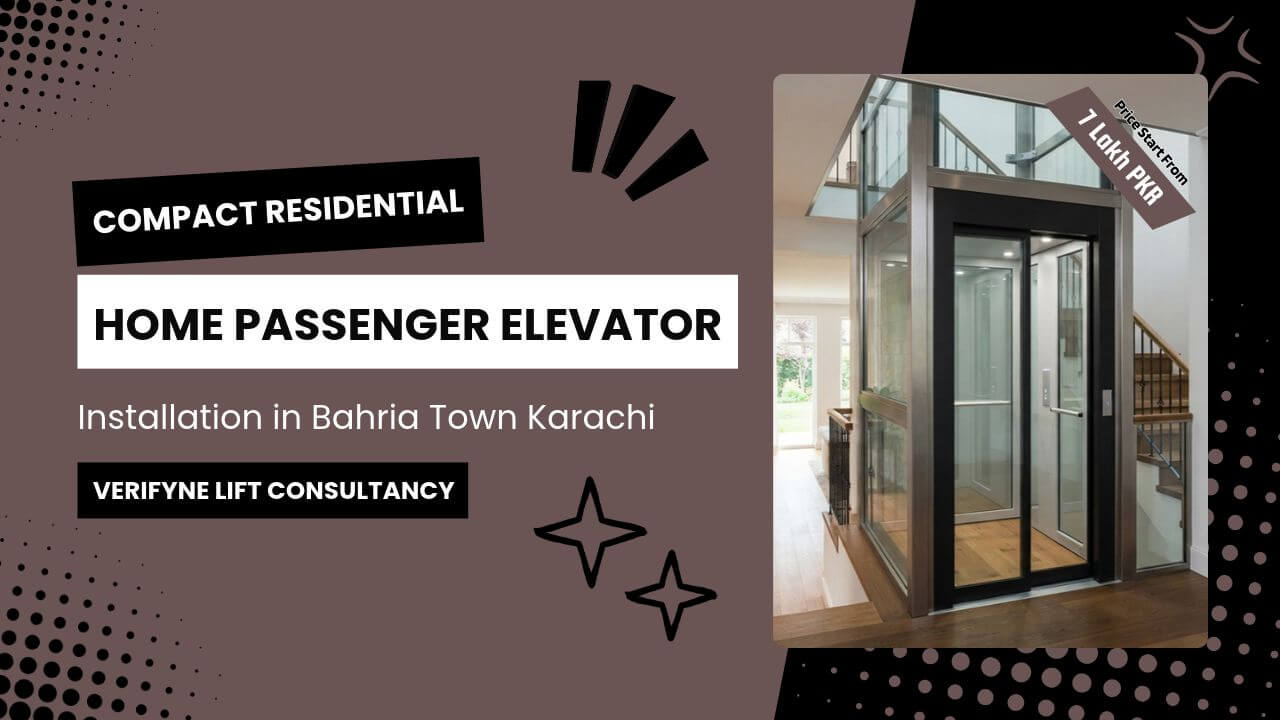
Compact homes often need practical vertical transportation that fits neatly into existing floor plans. A well-planned elevator can improve movement between different household levels without taking excessive usable space. It also helps residents reach upper floors more comfortably during everyday routines. Careful planning considers shaft dimensions, travel distance, entrance positioning, and available structural space. In addition, the Home Passenger Elevator Installation process can align equipment selection with the property’s layout and usage requirements. Proper coordination also supports smooth operation, safe access, and dependable passenger movement. As a result, homeowners can gain convenient vertical mobility while maintaining a balanced interior arrangement in Bahria Town Karachi.
Family Residences in Bahria Town Karachi Suitable for Space Saving Elevator Systems

Family homes with several floors can benefit from vertical transportation that uses available space carefully. Space saving elevator systems provide easier access where stair travel becomes inconvenient during regular household activities. They can also support elderly family members, children, and residents carrying everyday items between levels. Before selection, professionals usually review floor heights, shaft dimensions, access points, structural conditions, and expected passenger usage in Bahria Town Karachi. Furthermore, suitable equipment can help maintain comfortable travel without creating unnecessary changes to the home’s existing layout. Proper planning also considers door placement, cabin dimensions, control arrangements, and safety requirements. Therefore, homeowners can select an elevator arrangement that supports practical movement while preserving valuable indoor space.
Why Choose Home Passenger Elevator Installation for Convenient Access Within Compact Residential Homes
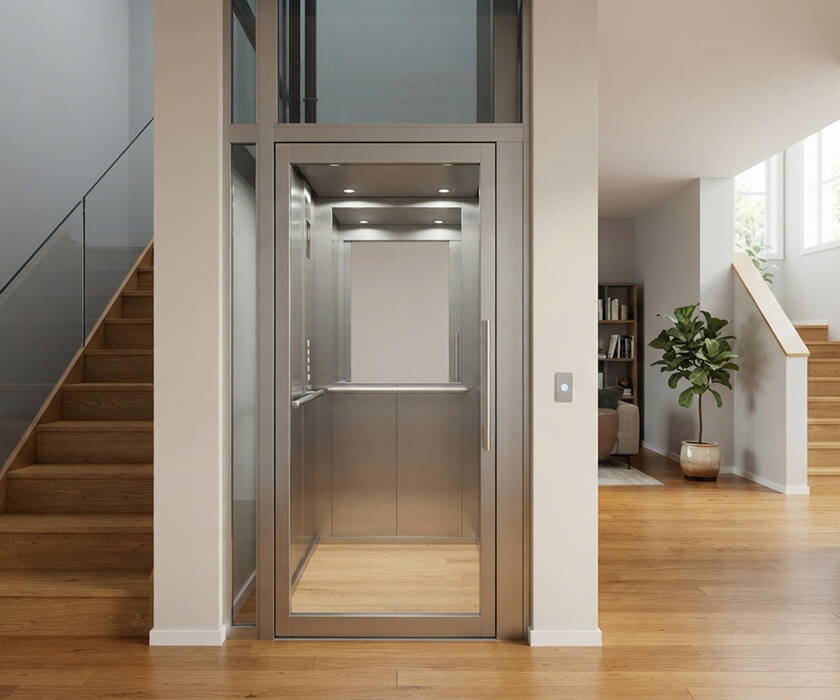
Multi level homes can become easier to navigate when vertical transportation matches the property’s available space and daily requirements. A suitable system reduces dependence on stairs while providing convenient access to upper and lower floors. It can also make regular movement more comfortable for family members with different mobility needs. Before selecting equipment, homeowners should consider travel height, floor count, shaft dimensions, loading requirements, and available installation space. In this context, Home Passenger Elevator Installation can provide a practical approach to improving accessibility without unnecessarily affecting the surrounding layout. Moreover, suitable controls and safety components help create dependable operation throughout daily use. Consequently, the right arrangement can improve household mobility while maintaining comfort across multiple storeys.
1- Greater Independence Across Multiple Storeys With Hydraulic Home Elevators
Hydraulic systems can provide steady vertical movement for homes where residents need dependable access between several levels. Their lifting arrangement can deliver controlled travel while supporting comfortable passenger movement during everyday use. This can prove useful for older family members or anyone who finds frequent stair climbing difficult. The system can also accommodate practical travel requirements when the property has clearly defined floor heights and access points. In addition, suitable planning allows the equipment to work within the available structural arrangement. Proper capacity selection helps maintain stable performance when several household members use the elevator throughout the day. As a result, hydraulic equipment can support greater independence while making movement between storeys more convenient.
2- Balanced Passenger Circulation Between Domestic Levels Using Traction Lifts
Traction systems can support smooth passenger movement between different household levels while maintaining consistent travel performance. Their operation suits properties where regular movement occurs throughout the day and residents require dependable access. A correctly selected system can also provide accurate stopping at each landing, helping passengers enter or exit comfortably. Before equipment selection, specialists can review travel height, expected usage, cabin requirements, and available shaft space. Furthermore, appropriate controls can improve ride quality while helping the system respond effectively to routine passenger demand. Door safety arrangements also contribute to secure boarding at every served level. Therefore, traction lifts can provide balanced movement for households requiring reliable access across multiple floors.
3- Minimal Structural Footprint For Smaller Residences With Shaftless Elevators
Shaftless systems can suit properties where conventional shaft construction may consume valuable indoor space. Their compact arrangement can help homeowners consider vertical transportation without extensive changes to the existing floor plan. This makes them useful for smaller properties where every section of usable area matters. However, the available travel path, floor openings, landing positions, and structural conditions still require careful assessment before selection. In addition, suitable access planning can help maintain convenient entry points without disrupting important household areas. Safety controls and appropriate capacity further support dependable daily operation. Therefore, shaftless elevators can provide practical vertical access while helping preserve more of the property’s available interior space.
Residential Pricing Overview for Compact Home Elevators Across Multi Storey Household Settings
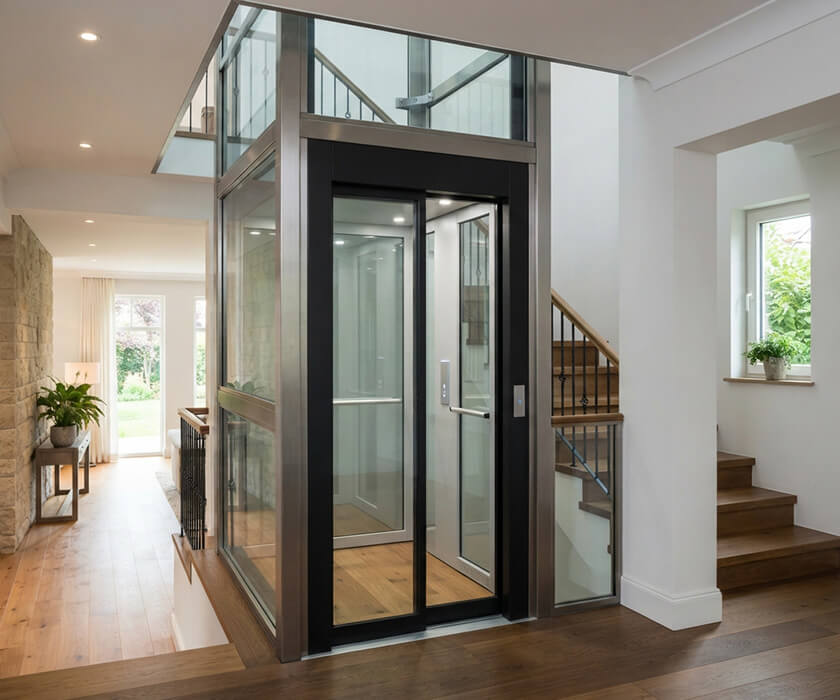
Elevator pricing for private homes depends on several technical and site related factors rather than equipment type alone. Travel height, number of floors, capacity, cabin dimensions, control systems, shaft requirements, and installation conditions can all affect the final cost. Hydraulic, traction, and shaftless arrangements may therefore fall within different pricing ranges for similar properties. Homeowners should also consider electrical work, structural preparation, landing access, finishing requirements, and commissioning when reviewing a quotation. The following figures provide practical estimated ranges for common household applications in Pakistan. Actual costs can change after a technical site assessment and final equipment selection. Nevertheless, these estimates help property owners compare options before beginning detailed planning.
Budget Estimate for Hydraulic Home Lifts in Smaller Household Floor Plans
Hydraulic home lifts can provide controlled vertical transportation for properties with straightforward multi floor requirements. Their pricing usually depends on lifting capacity, travel distance, cabin dimensions, hydraulic equipment, and site preparation. A typical two floor arrangement may require approximately 20 feet of travel height depending on the building’s floor-to-floor measurements. The final quotation may increase when the project requires customized cabin finishes, additional safety equipment, or structural modifications. Therefore, homeowners should confirm dimensions and technical requirements before approving the final specification. This estimate offers a useful starting point for comparing hydraulic options within smaller household layouts.
Travel Height: 20 ft
Number of Floors: 2
Estimated Price: PKR 2,200,000–3,500,000
Pricing Overview for Traction Passenger Elevators in Private Multi Level Homes
Traction passenger elevators can provide smooth movement across multiple floors while supporting regular household traffic. Their cost depends on travel height, passenger capacity, motor arrangement, cabin specification, control equipment, and installation conditions. A three floor home may require around 30 feet of travel, although actual height varies according to the building’s floor levels. Additional expenses may apply when the property requires special finishes, customized entrances, or extensive electrical preparation. Consequently, a detailed assessment helps establish a more accurate project budget before procurement. These figures provide an initial reference for homeowners comparing traction equipment for multi level properties.
Travel Height: 30 ft
Number of Floors: 3
Estimated Price: PKR 2,800,000–4,500,000
Cost Range for Shaftless House Elevators in Limited Space Property Layouts
Shaftless house elevators can offer a practical choice where available floor space makes conventional construction difficult. Their cost varies according to travel distance, platform or cabin arrangement, capacity, access configuration, safety equipment, and site conditions. A two floor property may require approximately 20 feet of vertical travel depending on the internal floor arrangement. Customized finishes or additional structural preparation can increase the overall investment. Before finalizing the equipment, homeowners should verify floor openings, landing access, electrical requirements, and available installation space. These figures provide a useful starting point for evaluating shaftless options in space restricted properties.
Travel Height: 20 ft
Number of Floors: 2
Estimated Price: PKR 1,800,000–3,000,000
| Product | Passengers / Weight / Size | Category | Condition | Make | Estimated Cost (PKR) |
|---|---|---|---|---|---|
| Home electric 200 kg (refurbished motor) | 2-3 persons | Semi Imported | Refurbished | Any | 1,150,000 PKR |
| Home electric 300 kg (new motor) | 4 persons | Semi Imported | New with Microprocessor VVVF | Turkey/China | 1,350,000 PKR |
| Home Hydraulic lift 250 kg | 2-4 persons | Semi Imported | New | Turkey/China | 700,000 PKR |
| Home Hydraulic lift 150 kg | 1 person | Semi Imported | New | Turkey/China | 650,000 PKR |
User Focused Elevator Components Supporting Reliable Movement Within Multiple Home Levels
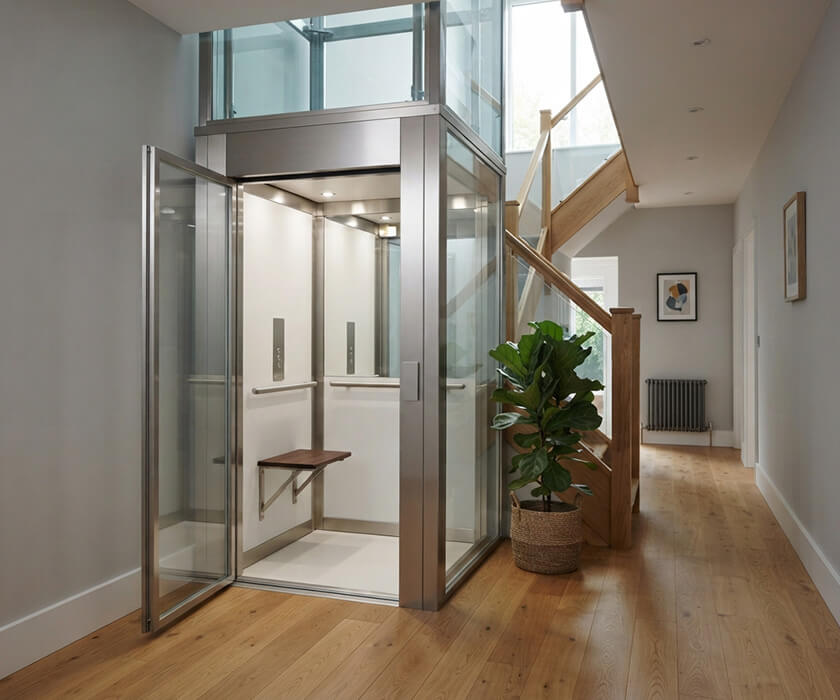
Modern household elevators rely on several components that contribute to safe, comfortable, and dependable passenger travel. Accurate leveling helps the cabin stop correctly at each landing, reducing uneven entry or exit points. Door sensors can also detect obstructions and help prevent unsafe closing during passenger movement. Backup controls provide an additional layer of support when electrical interruptions affect normal operation. When combined with suitable capacity, reliable controls, and appropriate safety equipment, these components improve everyday usability. Home Passenger Elevator Installation should therefore consider more than the lifting mechanism alone when planning a complete system. A balanced specification can help homeowners achieve dependable performance across multiple household levels.
1- Home Passenger Elevator Installation With Automatic Leveling Controls
Automatic leveling controls help the elevator stop accurately at each designated floor. This function improves passenger comfort by reducing uneven gaps between the cabin floor and landing surface. It can also make entry easier for older residents or people carrying household items. Accurate positioning supports smoother boarding while reducing unnecessary adjustment after the elevator reaches its destination. In addition, reliable leveling contributes to consistent operation during repeated daily trips. Proper calibration remains important because floor heights, equipment settings, and site conditions can influence stopping accuracy. Consequently, this control function plays an important role in creating comfortable access across different home levels.
2- Intelligent Door Sensors Inside the Elevator Supporting Safer Entry
Door sensors play an important role in protecting passengers during boarding and exit. These devices can detect objects or people within the doorway area and help prevent unsafe door movement. As a result, residents can enter or leave the elevator with greater confidence during routine household use. Sensor performance also supports smoother operation when several family members use the system throughout the day. Proper positioning and calibration help the controls respond accurately to interruptions near the entrance. Furthermore, dependable door monitoring works alongside other safety mechanisms to strengthen passenger protection. Therefore, intelligent sensors form an important part of a reliable elevator environment within private homes.
3- Emergency Backup Controls Within the Lift Supporting Power Loss
Power interruptions can temporarily affect normal elevator operation, making backup controls an important consideration for household systems. Emergency functions can help manage the cabin safely when the main electrical supply becomes unavailable. Depending on the selected equipment, backup arrangements may support controlled movement, lighting, alarms, or emergency communication. These functions can provide residents with greater reassurance during unexpected electrical failures. In addition, appropriate backup capacity should match the elevator’s operational requirements and safety specification. Regular inspection helps confirm that emergency components remain ready for use when needed. Therefore, reliable backup controls can strengthen overall passenger safety during unexpected power interruptions.
Verifyne Lift Consultancy Professional Advisory for Integrated Household Elevator Planning
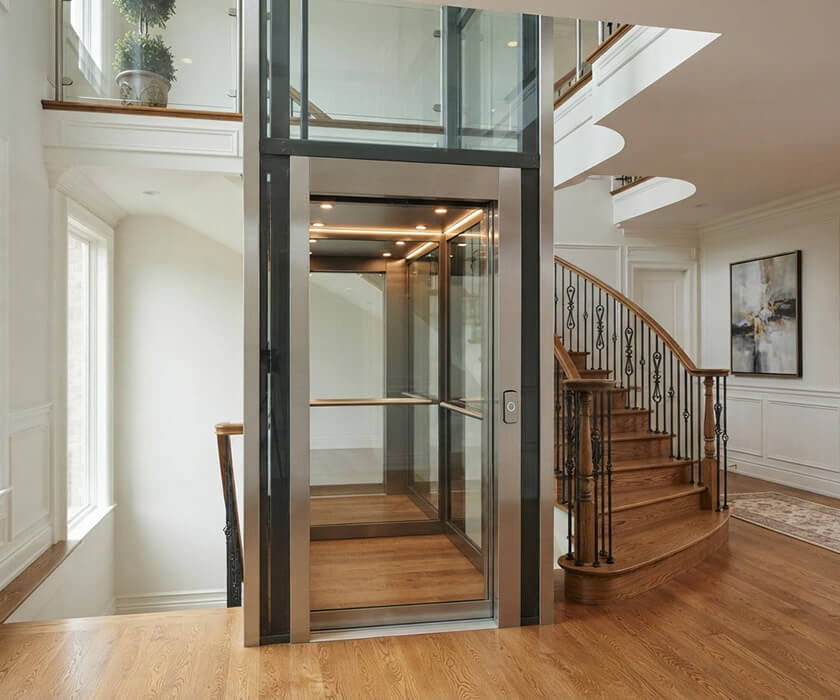
Professional planning can help homeowners coordinate elevator requirements with architectural, electrical, structural, and operational conditions. Verifyne Lift Consultancy can review important project details before equipment selection or installation begins. This approach helps identify suitable shaft dimensions, floor heights, access points, capacity requirements, and site limitations at an early stage. It can also support better coordination between building layouts and elevator equipment. Furthermore, technical supervision can help maintain proper sequencing during installation, testing, commissioning, and future maintenance planning. Home Passenger Elevator Installation benefits from this structured advisory process when the property has limited space or specific access requirements. As a result, homeowners can make more informed decisions while reducing avoidable planning issues.
1- Site Survey Planning Before Home Passenger Elevator Installation Begins
A detailed site survey helps identify the physical conditions that can affect an elevator project before work starts. Specialists can review shaft dimensions, floor heights, landing access, structural conditions, electrical provisions, and available installation space. These checks help determine whether the proposed equipment fits the property’s existing arrangement. They can also reveal potential restrictions that may require architectural or structural adjustments. In addition, early assessment supports more accurate equipment selection and project scheduling. This process reduces the likelihood of unexpected changes after installation work begins. Therefore, a well-planned site survey provides an important foundation for safe, practical, and properly coordinated elevator deployment.
2- Electrical Coordination Checks for Safe Elevator System Integration
Electrical coordination helps ensure that the elevator receives suitable power for its controls, motor equipment, lighting, safety functions, and related components. The assessment can review available supply capacity, wiring routes, protection devices, earthing, and emergency power requirements. Proper coordination also helps prevent conflicts between elevator equipment and the property’s existing electrical infrastructure. Furthermore, early electrical planning allows technicians to prepare appropriate connections before commissioning begins. This can improve installation efficiency while supporting dependable system operation after handover. Regular inspection of electrical components also contributes to long term reliability and passenger safety. Consequently, coordinated electrical planning remains an essential part of a well managed home elevator project.
3- Testing Oversight Recommendations for Dependable Lift Performance
Testing confirms whether the completed elevator performs according to its specified operational and safety requirements. A structured inspection can cover leveling accuracy, door operation, controls, alarms, emergency functions, travel performance, and passenger access. These checks help identify issues before the system enters regular household service. In addition, testing can confirm that the equipment responds correctly across every designated landing. Professional oversight also provides an opportunity to review operating procedures with the property owner or responsible users. Proper documentation can support future maintenance planning and service inspections. Therefore, thorough testing helps establish dependable lift performance while providing greater confidence before routine passenger use.