Frequently Asked Questions:
What load capacity is suitable for a cargo lift in military facilities?
Capacity commonly ranges from 1,000 kg to 2,000 kg, depending on equipment weight, cabin size, and daily usage.
Which type of lift is suitable for transporting heavy supplies?
Goods lifts, freight elevators, or hydraulic material lifts can suit heavy supply movement based on building requirements.
How much does a cargo elevator cost in Pakistan?
Pricing varies by capacity, travel height, cabin specifications, and site conditions. Call 0321 586 3975 for a project estimate.
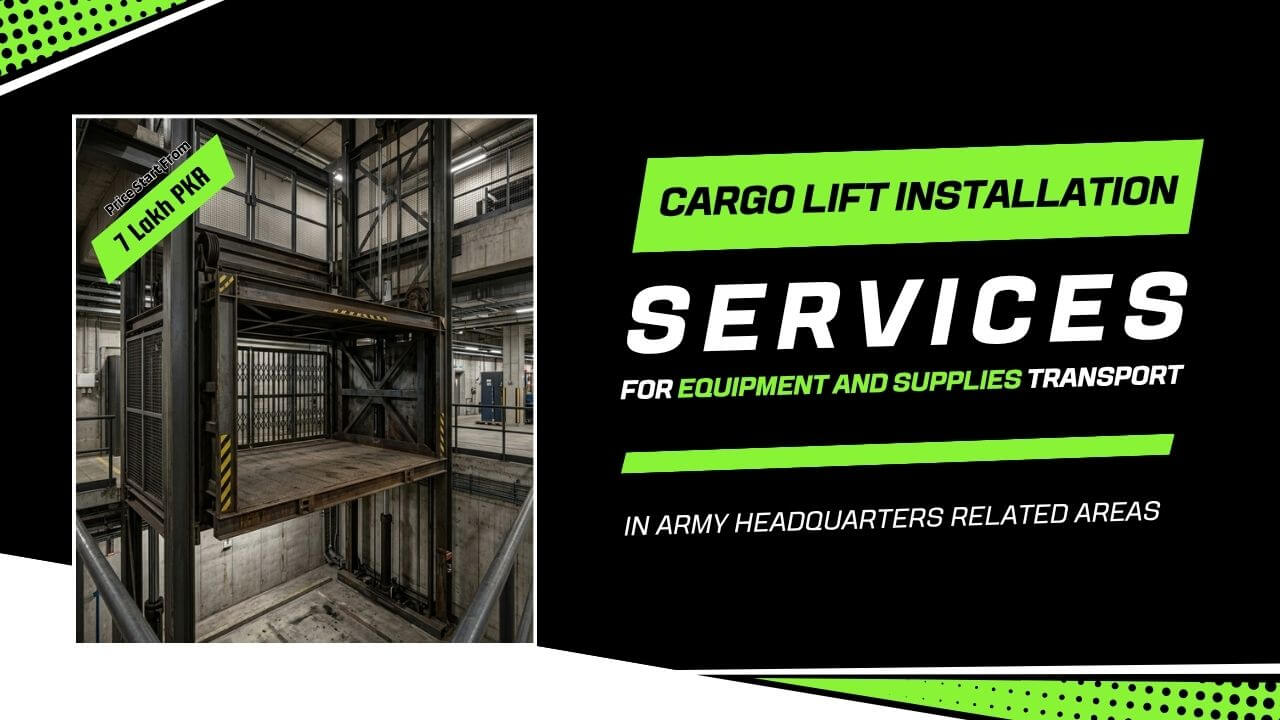
Army headquarters areas often require dependable vertical movement for heavy equipment, packaged supplies, machinery, and routine materials. Dedicated cargo elevators can reduce manual carrying between storage rooms, service sections, and upper floors. Proper load capacity helps accommodate bulky items without creating unnecessary handling difficulties. In such environments, Cargo Lift Installation Services can be planned according to building structure, usage frequency, cabin dimensions, and expected loads. Suitable door widths also make loading carts, crates, and large equipment more convenient. Durable cabin interiors can withstand frequent movement of heavy goods during daily operations. A properly assessed lift arrangement supports safer, smoother material transportation across multiple building levels.
Recommended Floor Zones for Cargo Elevators in Army Support Facilities

Army support facilities can include storage rooms, maintenance sections, supply areas, workshops, and administrative floors with different transportation requirements. Cargo elevators are particularly useful where heavy materials need regular movement between separated levels. Locating the lift near frequently used storage or loading points can reduce unnecessary carrying distances. In Pakistan, Cargo Lift Installation Services may be planned around existing access routes, floor layouts, equipment dimensions, and operational requirements. Wider entrances can simplify movement of crates, trolleys, and bulky supplies into the cabin. Adequate landing space also helps workers load and unload materials more conveniently. Careful floor selection can make daily goods transportation more practical within support facilities.
Why Cargo Lift Installation Services Suit Routine Movement of Heavy Equipment in Defence Buildings
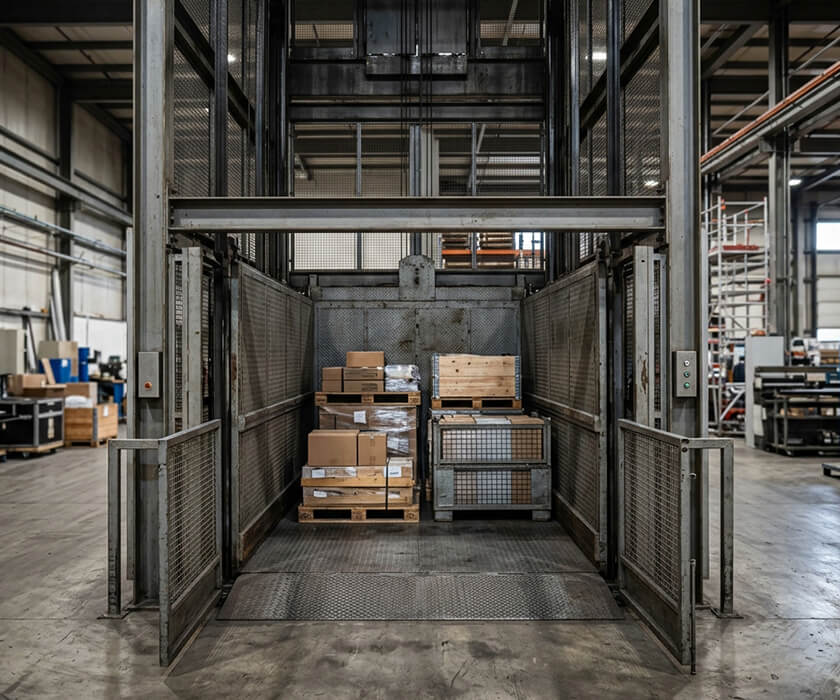
Heavy equipment movement across defence buildings can become difficult when materials must be carried manually between several floors. Cargo elevators provide a dedicated means of transporting machinery, crates, tools, and other substantial loads vertically. Their higher carrying capacity makes them suitable for areas with frequent material movement. For this reason, Cargo Lift Installation Services can be considered when building layouts require dependable transportation of heavy goods. Suitable cabin sizes allow larger items to enter and exit with fewer handling difficulties. Strong flooring and controlled stopping can further support regular loading activities. This makes cargo elevators practical for defence buildings where equipment movement forms part of routine operations.
1- Rapid Shifting of Crated Machinery With Industrial Material Lifts
Crated machinery can be difficult to move manually, particularly when equipment must reach upper floors or lower storage levels. Material lifts provide dedicated vertical transportation for large packages, machinery cases, tools, and industrial goods. Appropriate cabin dimensions can accommodate sizeable crates while allowing easier loading with trolleys or handling equipment. Cargo Lift Installation Services can account for the weight, dimensions, travel height, and frequency of machinery movement. Wide landing access can further simplify the transfer of packed equipment into the cabin. Controlled acceleration helps reduce unnecessary movement during transportation. These practical benefits make material lifts suitable for repeated handling of crated machinery.
2- Protected Dispatch of Packaged Supplies Using Hydraulic Hoist Lifts
Packaged supplies may include boxed materials, maintenance items, provisions, spare parts, and other goods requiring regular vertical transportation. Hydraulic hoist lifts can provide controlled movement where substantial loads need to travel between different levels. Their cabin arrangement can be selected according to package sizes, loading methods, and expected weight. Properly planned Cargo Lift Installation Services can also consider landing access, door dimensions, travel distance, and operational frequency. Secure loading reduces the likelihood of packages shifting unnecessarily during movement. Suitable cabin flooring can support repeated trolley or pallet handling. This type of arrangement can make supply dispatch more manageable across multi-level facilities.
3- Convenient Upward Hauling of Heavy Stores Through Freight Elevators
Heavy stores often require movement from ground-level receiving points to storage rooms, workshops, or upper-floor departments. Freight elevators provide a practical way to transport substantial goods without relying heavily on manual stairway handling. Their larger cabins can accommodate equipment, cartons, containers, and other materials according to the selected capacity. Cargo Lift Installation Services can be assessed around expected load weights, cabin requirements, landing locations, and daily usage. Strong internal surfaces can withstand regular movement of heavy goods. Appropriate door openings can also make loading and unloading easier. A suitable freight elevator can therefore simplify upward transportation within facilities handling substantial quantities of stored materials.
Estimated Cargo Lift Expenses for Supply Handling Within Secure Military Premises
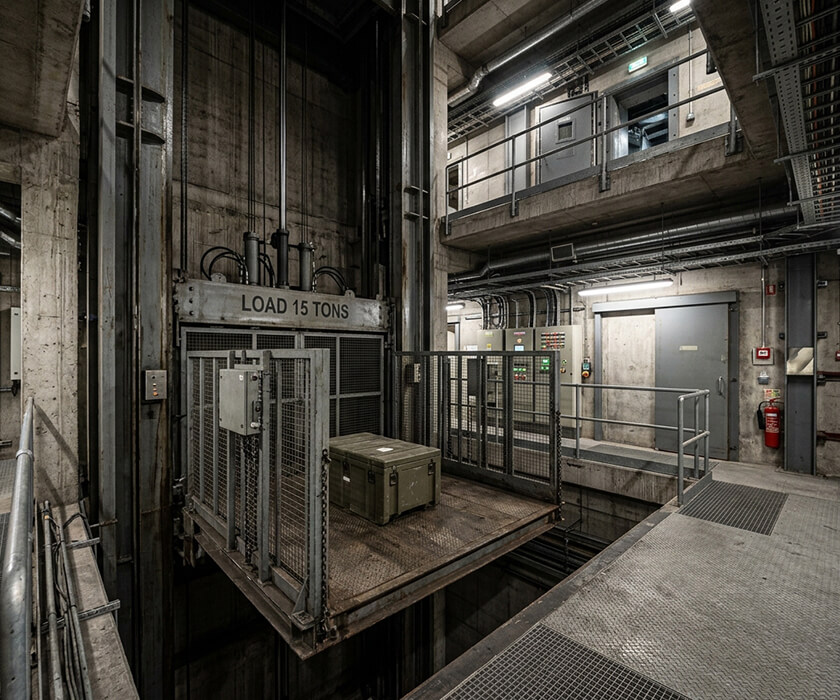
Cargo lift pricing depends on several project factors, including carrying capacity, travel height, cabin dimensions, shaft requirements, door configuration, and building conditions. Equipment specifications can influence the overall budget when a lift must handle heavy supplies or bulky machinery. Cargo Lift Installation Services may involve additional structural work where an existing building requires shaft preparation or landing modifications. Hydraulic, electric, and industrial freight configurations can also carry different price ranges. Installation conditions may affect labour, electrical work, safety equipment, and commissioning expenses. A detailed site assessment is therefore useful before confirming the final project budget. The following estimates provide practical planning figures rather than fixed quotations.
Budget Range for Industrial Freight Elevators in Equipment Storage Rooms
Industrial freight elevators can be suitable for storage rooms where heavy equipment, boxed materials, and maintenance goods require regular vertical transportation. A larger carrying capacity can help accommodate bulky loads while reducing the number of separate trips. The required lift height depends on the number of floors served and the building’s internal layout. Cargo Lift Installation Services pricing may also vary according to cabin size, shaft preparation, door arrangement, and electrical requirements. Reinforced cabin surfaces can support repeated handling of heavy goods. Proper landing dimensions can make trolley loading more convenient. For preliminary budgeting, an industrial freight elevator can fall within the following estimated range.
Load Capacity: 1000 kg
Lift Height: 9 m
Estimated Price: PKR 2,800,000–3,800,000
Estimated Pricing for Hydraulic Material Lifts in Supply Distribution Sections
Hydraulic material lifts can serve supply distribution sections where substantial goods need controlled movement between building levels. Their capacity can be selected according to the weight of stored supplies, equipment, containers, or packaged materials. Lift height is generally determined by the number of floors and required vertical travel. Cargo Lift Installation Services costs can change according to hydraulic equipment, cabin dimensions, landing doors, structural preparation, and installation conditions. A suitable cabin floor can support repeated loading with carts or pallets. Proper access at each landing can also improve daily material handling. A reasonable preliminary budget for this type of installation is outlined below.
Load Capacity: 1500 kg
Lift Height: 12 m
Estimated Price: PKR 3,200,000–4,000,000
Cost Projection for Electric Goods Elevators in Multi Level Military Buildings
Electric goods elevators can provide dependable vertical transportation for buildings where heavy supplies need to travel between several levels. Their capacity and cabin size can be selected according to the type of equipment, packaging, and handling method used on site. Multi-level applications may require greater travel height, additional landing doors, and suitable shaft arrangements. Cargo Lift Installation Services costs can therefore vary according to motor specifications, control equipment, cabin construction, and building preparation. Strong cabin flooring can support regular movement of heavy materials. Proper door dimensions can make larger goods easier to load. For preliminary planning, the following figures can be used as an estimated project range.
Load Capacity: 2000 kg
Lift Height: 15 m
Estimated Price: PKR 4,000,000–5,500,000
| Lift Category | Estimated Cost (PKR) |
|---|---|
| Hydraulic Cargo Lift | 1,500,000 – 2,500,000 PKR |
| Traction Cargo Lift | 3,500,000 – 5,000,000 PKR |
| Chain-Driven Cargo Lift | 2,000,000+ PKR |
| Heavy Duty Cargo Lift | 5,000,000+ PKR |
| Platform Cargo Lift | 2,000,000 – 4,000,000 PKR |
| Industrial / Warehouse Cargo Lift | 1,500,000 – 6,000,000+ PKR |
| Custom Built Cargo Lift | 5,000,000 – 25,000,000 PKR |
High Strength Cargo Elevator Systems for Secure Material Transport in Military Complexes
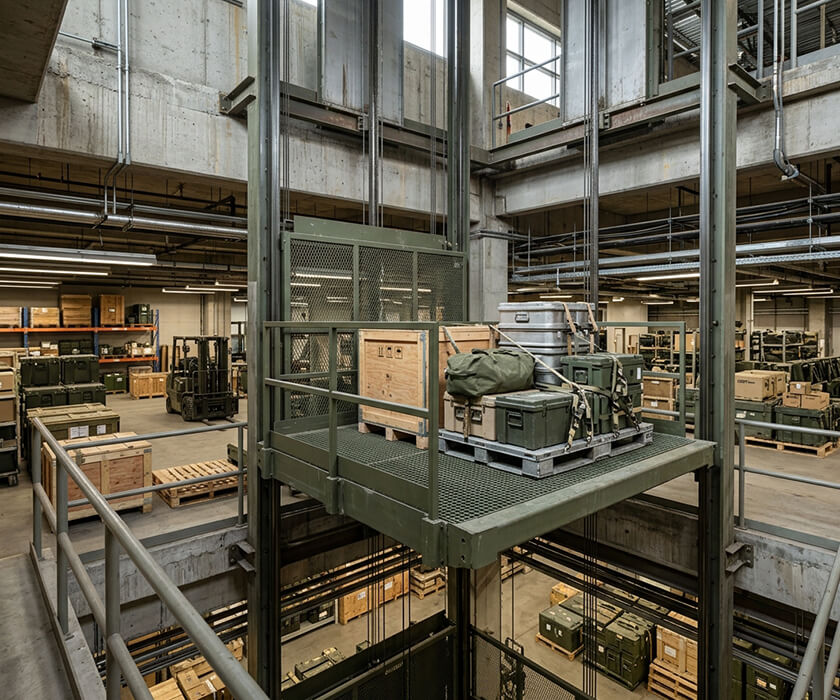
Military complexes may handle equipment, maintenance materials, packaged supplies, and heavy goods that require dependable vertical transportation. Cargo elevator construction should account for expected loads, usage frequency, cabin dimensions, and building conditions. Cargo Lift Installation Services can incorporate suitable cabin materials, structural arrangements, braking equipment, and access requirements based on the project. Strong internal construction can help withstand repeated loading of substantial goods. Compact shaft planning can also preserve usable floor space where building area is limited. Emergency stopping equipment provides an additional layer of operational control. Together, these considerations help create a practical cargo transportation arrangement for demanding facilities.
1- Steel Cabin Construction for Cargo Lift Installation Services for Routine Loads
Steel cabin construction can provide the strength required for regular transportation of equipment, cartons, tools, and other heavy materials. A robust cabin structure is particularly useful where loading occurs frequently throughout the working day. Cargo Lift Installation Services can specify cabin thickness, flooring strength, door dimensions, and internal finishes according to expected operating conditions. Reinforced surfaces can help withstand contact from trolleys, crates, and handling equipment. Durable flooring can also support repeated loading without excessive wear. Proper cabin sizing makes it easier to accommodate routine loads without unnecessary congestion. This construction approach can provide a dependable interior for demanding cargo transportation duties.
2- Low Space Shaft Planning Preserving Interior Areas Using Elevator Systems
Limited floor area can make shaft planning an important consideration when introducing a cargo elevator into an existing building. A compact shaft arrangement can help preserve surrounding rooms, corridors, storage areas, and working sections. Cargo Lift Installation Services can assess available dimensions before determining the most suitable shaft position. Careful planning can reduce unnecessary changes to existing interior areas. Appropriate landing access can also maintain convenient movement around each served floor. Compact equipment arrangements may be considered where building space is restricted. A well-planned elevator layout can therefore provide vertical goods transportation while making better use of available interior space.
3- Overspeed Braking Controls for Safer Stopping During Cargo Lift Operation
Overspeed braking controls are important when cargo elevators regularly transport heavy equipment and substantial supplies. These controls can help bring the cabin to a controlled stop if an abnormal operating condition occurs. Cargo Lift Installation Services can include appropriate braking equipment based on lift capacity, travel height, operating requirements, and safety standards. Reliable stopping mechanisms can provide additional protection during heavy-load transportation. Regular inspection of braking components is also important for maintaining dependable operation. Proper control systems can help limit unexpected cabin movement during transportation. These measures contribute to safer cargo handling within facilities where heavy loads are moved frequently.
Verifyne Lift Consultancy Advisory for Heavy Load Transport in Defence Command Centre
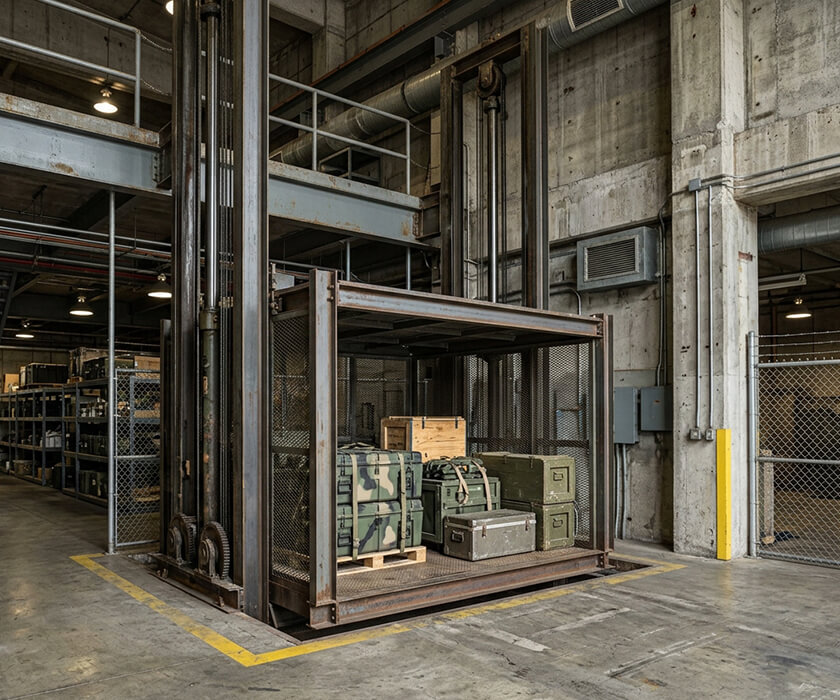
Defence command centres can have different structural layouts, traffic patterns, storage requirements, and equipment handling needs. A professional lift assessment can help determine suitable locations, carrying capacity, cabin dimensions, and access arrangements. Cargo Lift Installation Services can then be evaluated according to the building’s practical requirements rather than relying on a standard configuration. Verifyne Lift Consultancy can review project conditions before recommending suitable specifications. Considerations may include shaft availability, floor access, load frequency, equipment dimensions, and operational routes. Proper planning can reduce unnecessary structural changes during project development. This advisory approach helps align cargo transportation requirements with the existing building environment.
1- Project Review for Cargo Lift Installation Services in Military Areas
A project review helps establish whether the proposed cargo lift arrangement matches the building’s physical and operational requirements. Site conditions, available shaft space, floor levels, access points, and expected load types can all influence the planning process. Cargo Lift Installation Services should be assessed against actual equipment weights, package dimensions, and transportation frequency. Reviewing these factors early can help identify structural or access concerns before project execution. The evaluation can also consider cabin dimensions, landing arrangements, electrical requirements, and safety provisions. A structured review supports more accurate specification development. This can help create a cargo transportation plan suited to the facility’s day-to-day requirements.
2- Route Assessment for Smooth Supply Movement Using Elevator Operations
Supply movement becomes more practical when the cargo lift location connects efficiently with receiving points, storage sections, workshops, and other frequently used areas. A route assessment can identify unnecessary carrying distances, narrow passages, difficult turns, or congested access points. Cargo Lift Installation Services can be planned around the most practical transportation route within the building. Proper landing access can make trolley movement easier at each served floor. Door positioning can also influence how quickly goods enter or leave the cabin. Reviewing the complete movement path helps reduce handling difficulties. This approach supports smoother supply transportation throughout the facility.
3- Building Analysis for Suitable Equipment Handling Via Lift Arrangements
Building analysis helps determine whether the existing structure can accommodate the proposed cargo lift arrangement effectively. Floor dimensions, shaft possibilities, landing locations, ceiling height, access routes, and structural conditions may all affect planning. Cargo Lift Installation Services can be specified after reviewing the building’s actual equipment transportation requirements. The analysis can also identify suitable areas for loading, unloading, and routine equipment handling. Appropriate cabin dimensions should reflect the size and weight of materials being transported. Existing circulation routes should remain practical after installation planning. A detailed building review supports a more suitable lift arrangement for ongoing equipment movement.